

Rwanda Travel Guide
Make a trip of it
If you are travelling for the race, the country is compact enough to turn a race weekend into a much bigger adventure.
Rwanda at a glance
- Best time to visit
- June to September (long dry season); December to February is a strong alternative
- Gorilla trekking
- Possible all year; minimum age 15
- Gorilla permit
- USD 1,500 per person per trek
- Typical trip length
- 6 to 12 nights
- Currency
- Rwandan franc (RWF); US dollars also widely accepted
- Malaria
- Lower risk than many African countries, especially in Kigali and the highlands; take advice from a travel clinic
Getting there
Kigali International Airport is the natural place to start and finish a Rwanda trip. It sits close to the city centre, so most hotels are 20 to 30 minutes away.
Airlines serving Kigali include RwandAir, KLM, Brussels Airlines, Qatar Airways, Turkish Airlines, Ethiopian Airlines and Kenya Airways. Useful connecting hubs are Amsterdam, Brussels, Doha, Istanbul, Addis Ababa and Nairobi.
- From the UK and Europe: one connection, usually 10 to 14 hours in total.
- From the US: one or two connections via Europe, the Gulf or Addis Ababa, usually 18 to 24 hours in total.
- From elsewhere in Africa: RwandAir links Kigali with cities such as Nairobi, Entebbe, Dar es Salaam and Johannesburg.
A new international airport is being built in Bugesera, next to the future circuit. It is expected to open later this decade, and could make race weekends especially easy to reach once it does.
Getting around
Rwanda is small enough to cross in a few hours, and it is one of the simplest African countries to navigate. Roads between the main sights are paved and well maintained, though winding through the hills.
- Kigali to the Bugesera circuit area
- About 45 minutes to 1 hour
- Kigali to Volcanoes National Park (Musanze)
- About 2 to 2.5 hours
- Kigali to Akagera National Park
- About 2.5 to 3 hours
- Kigali to Lake Kivu (Rubavu)
- About 3 to 3.5 hours
- Kigali to Nyungwe Forest
- About 5 to 6 hours
- Lake Kivu to Nyungwe (Congo Nile road)
- About 4 to 5 hours
- Private driver guide: the most popular choice for visitors. Your driver handles park logistics, permits on the day and early starts for treks.
- Self-drive: possible, with traffic on the right. Fine for confident drivers, but a 4x4 is best for Akagera and rural roads.
- In Kigali: taxis and ride apps such as Yego and Move are easy to use, and moto taxis are everywhere for short hops.
- Domestic flights and helicopters: available for those short on time, for example to Kamembe near Nyungwe.
Kigali
Many visitors expect a transit stop and leave impressed. Kigali is clean, safe and well organised, a city that has rebuilt itself over three decades.
- Kigali Genocide Memorial: one of the most carefully presented memorials anywhere. Recommended for ages 15 and over.
- Kimironko Market: a must for colour, crafts and everyday city life.
- Food: the restaurant scene surprises most first-time visitors, from Rwandan buffets to excellent coffee houses.
Where to stay
The leafy neighbourhoods of Kiyovu, Kimihurura, Kacyiru and Nyarutarama are the best bases, with quiet streets and good restaurants nearby. Choose from international hotels such as the Kigali Marriott and Radisson Blu, smaller boutique hotels such as Heaven and The Retreat, and good value guesthouses. Book early for race week, as rooms will be in high demand.
Tip: give Kigali at least two nights, one to arrive and explore and one for the memorial and the market.
Gorilla trekking in Volcanoes National Park
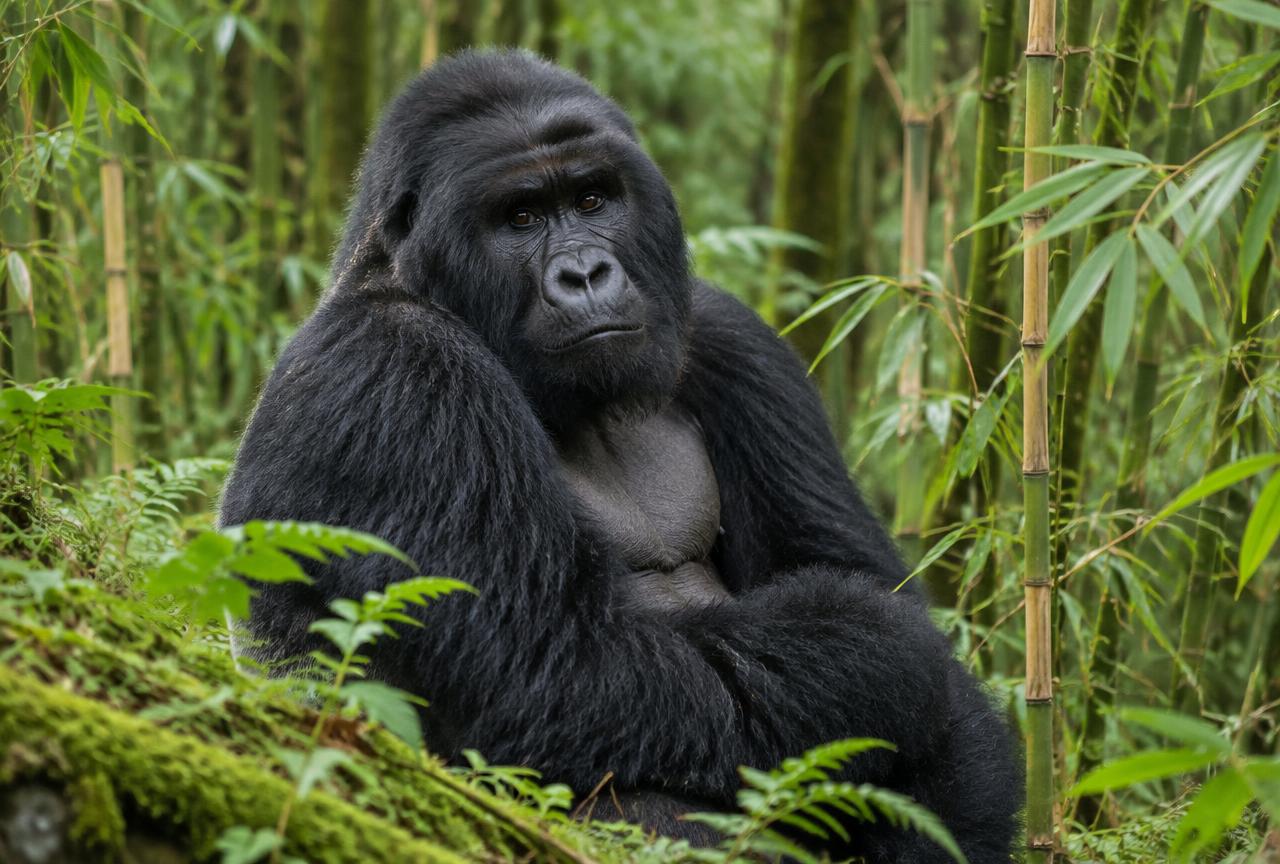
This is the experience most people come for: standing a few metres from a family of mountain gorillas.
- The setting: six dormant volcanoes in the north-west, covered in thick mountain forest.
- The gorillas: ten habituated troops receive visitors every day, and you spend one hour with your group.
- Trek length: usually two to four hours, shorter on average than in Uganda's Bwindi.
- Minimum age: 15.
- Book early: permits are released in fixed daily numbers. For the popular dry months, secure them 9 to 12 months ahead and plan the rest of the trip around them. Once the race date is announced, expect race-week demand to add pressure.
- Hire a porter: around USD 15 to 20 per trek. Porters carry your bag and steady you on steep descents, and the fee goes straight to local families.
- Do two treks if you can: each day brings a different troop, different behaviour and different light, and many visitors say the second trek is the more memorable one.
The Virunga Highlands
The volcano chain that defines Rwanda's north-west, shared with Uganda and the DRC and rising above 4,500 metres. There is great hiking beyond the gorilla trek:
- Mount Bisoke and its crater lake
- Mount Karisimbi, Rwanda's highest peak at 4,507 metres
- The Musanze Caves
- Golden monkey trekking in the bamboo forest
- Tea plantations and farmland on the lower slopes
Akagera National Park
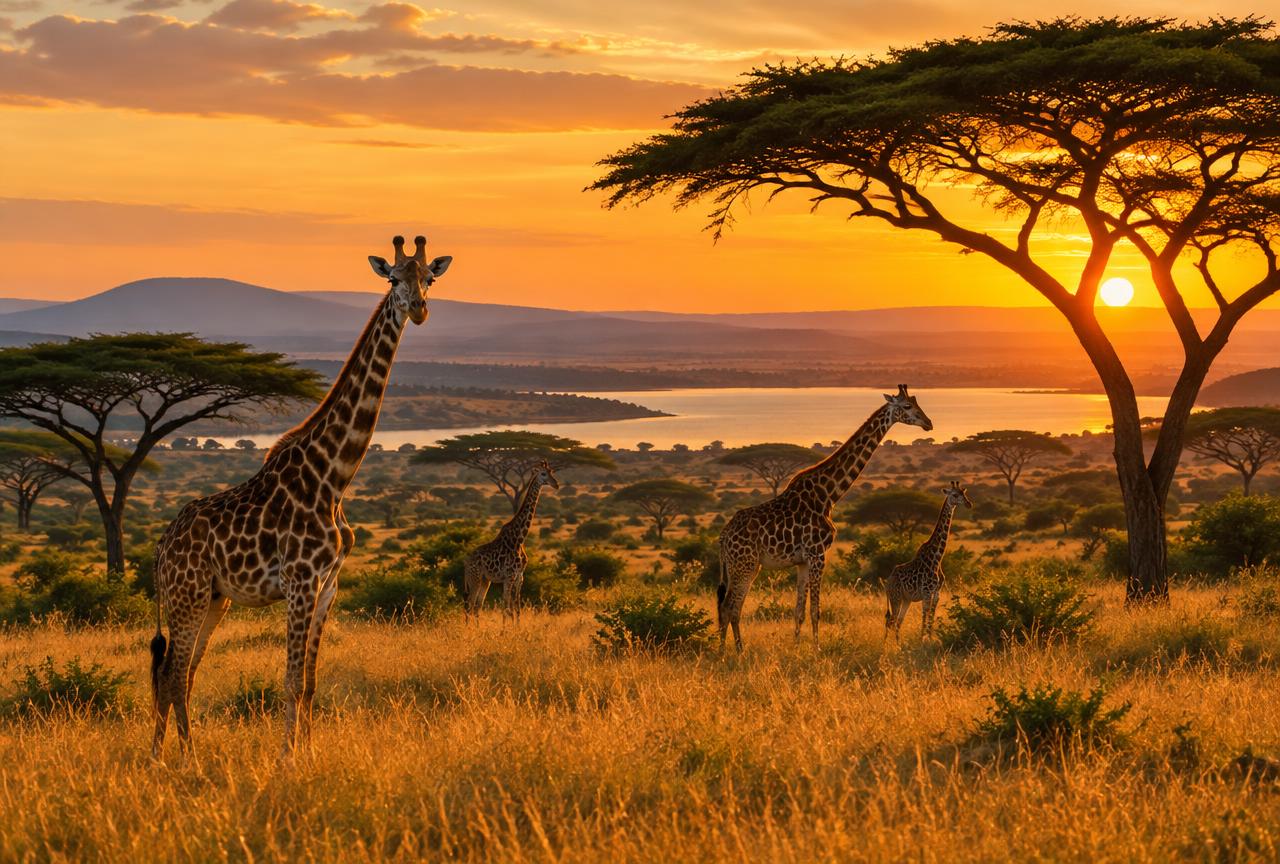
Rwanda's savannah safari park, in the east on the Tanzania border, and one of Africa's great conservation comebacks.
- Almost entirely poached out after 1994, then restored by African Parks.
- Lions were reintroduced in 2015 and black rhino in 2017. The park now holds the Big 5.
- Lakes, papyrus swamps and rolling grassland, explored by game drive or by boat.
- Suitable for all ages, and the best option for anyone under 15 who cannot join the gorilla trek.
Nyungwe Forest National Park
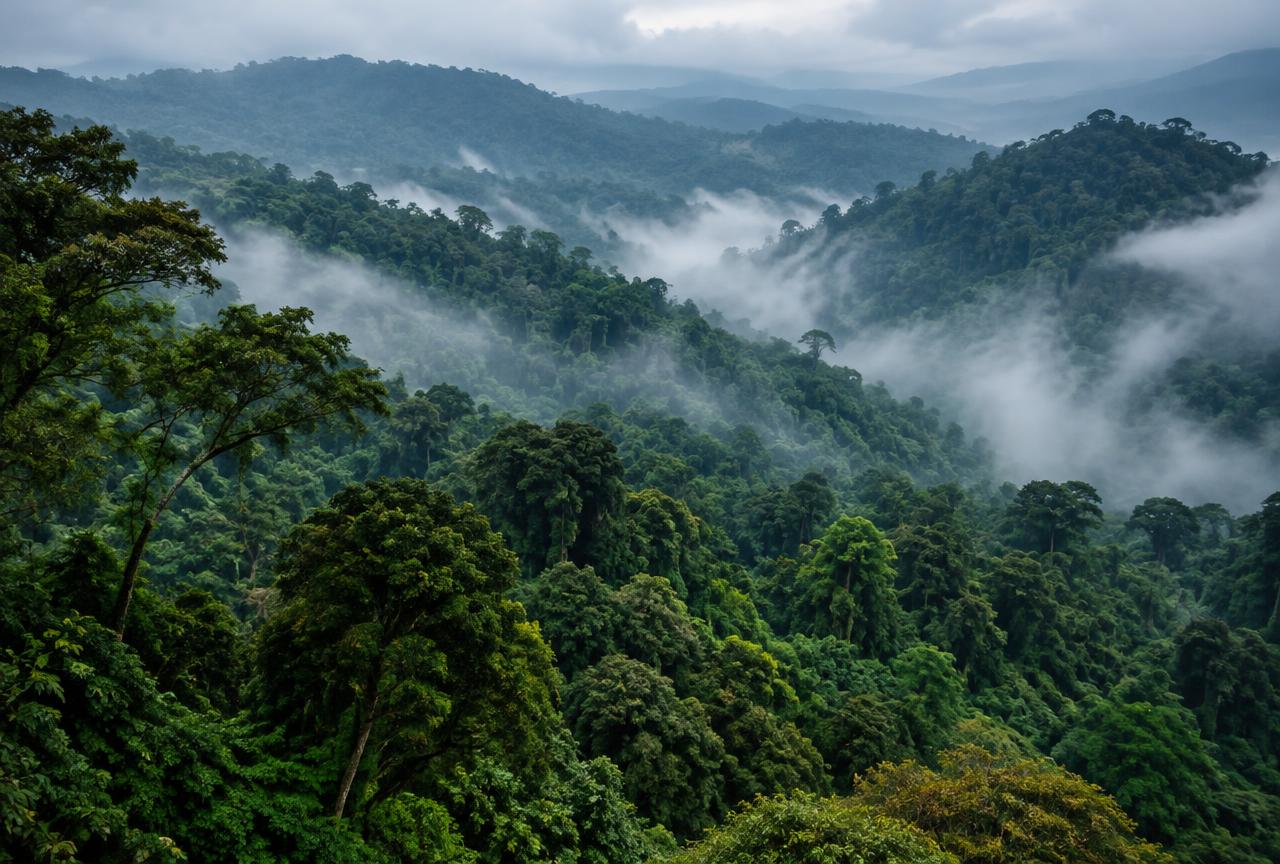
An ancient rainforest in the south, among the oldest and most biodiverse mountain forests in Africa.
- Covers 1,019 square kilometres of misty hills.
- Home to 13 primate species, including chimpanzees and colobus monkeys.
- Chimpanzee trekking: less famous than Uganda's Kibale but just as rewarding. Minimum age 15, with early starts to find the chimps as they feed.
- Canopy walkway: suspended about 50 metres above the forest floor, one of only a handful in Africa.
Lake Kivu
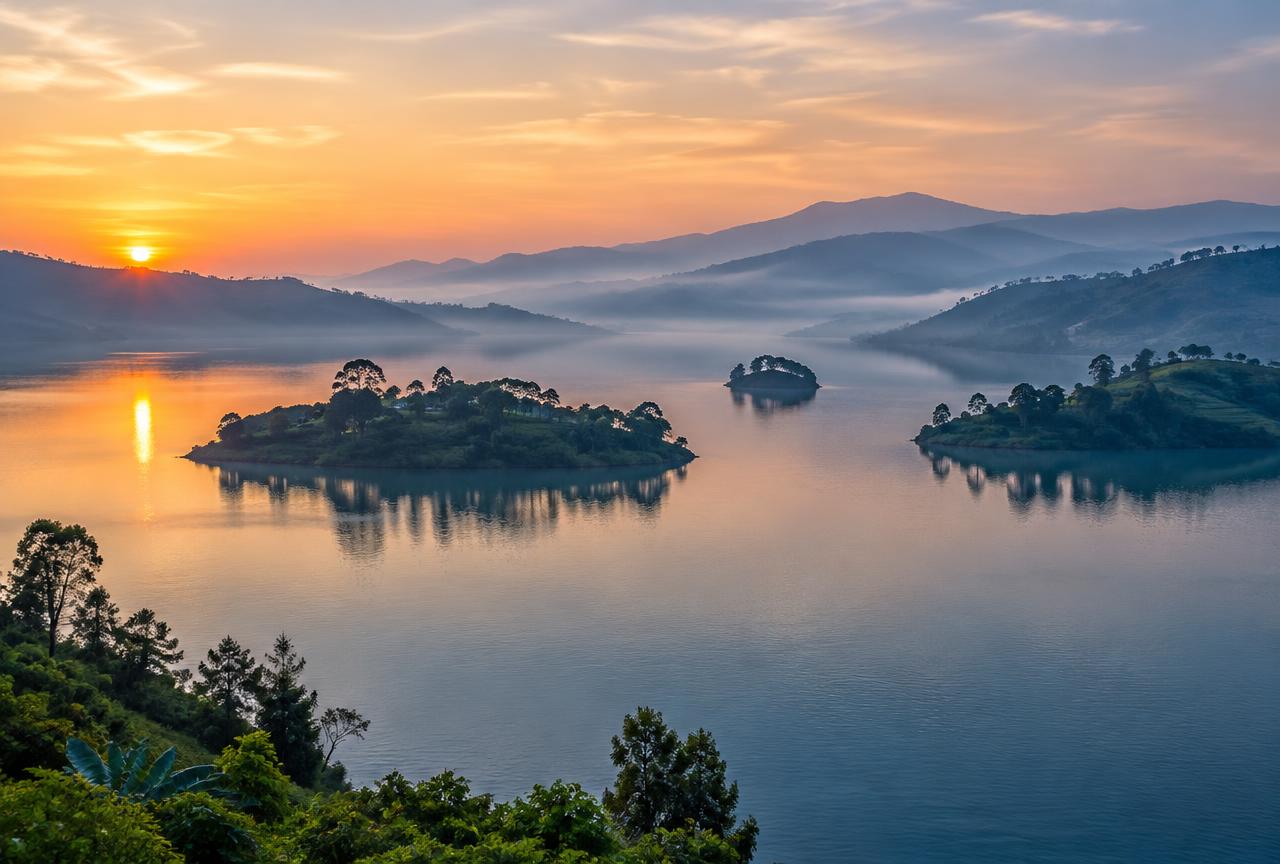
Rwanda's most overlooked highlight: a huge, deep lake on the Congo border, scattered with forested islands and fishing villages.
- Kayak between islands, or sail on a traditional fishing pirogue.
- Sundowners on a lakeside terrace in Rubavu, Karongi or Rusizi.
Why go: after the effort of the gorilla trek and the emotional weight of Kigali, two nights on Kivu is the perfect way to slow down before flying home.
When to go
Long dry season · June to September
Best trekking: firmest trails, clear skies, excellent Akagera game viewing. Highest demand, so book well ahead.
Short dry season · December to February
Good trails, beautiful scenery and easier permit availability. A special time to spend Christmas or New Year.
Short rains · October to November
Lush green forest, good permit availability and lower rates. Trails are wetter but manageable.
Long rains · March to May
Heaviest rain and the toughest, most slippery treks. Best left to fit, adventurous travellers.
Rwanda or Uganda for gorillas?
- Rwanda: more accessible, more polished infrastructure, shorter treks on average, plus Kigali. Permits cost more (USD 1,500).
- Uganda: wilder and more remote, with a rawer feel in Bwindi. Permits cost less (USD 800).
Combining Rwanda with a wider trip
Rwanda pairs naturally with Uganda for more primates: Bwindi is around four to five hours by road from Kigali. For something different after the race, Lake Kivu or Akagera turn a city weekend into a full holiday.
- Kenya: about 1.5 hours by air to Nairobi, then on to the Masai Mara.
- Tanzania: fly via Dar es Salaam or Kilimanjaro for the Serengeti, then finish on the beaches of Zanzibar.
- Southern Africa: direct flights to Johannesburg open up South Africa, Botswana and Victoria Falls.
- East Africa Tourist Visa: one visa covers Rwanda, Uganda and Kenya, handy for multi-country trips.
Practical tips
- Permits first: book gorilla permits before anything else.
- Pack for the trek: sturdy waterproof walking boots, a light rain jacket, long trousers and long sleeves, gardening gloves for grabbing nettles and vines, gaiters or socks to tuck trousers into, layers for cool mornings, water and snacks.
- Visas: nationals of Commonwealth, African Union and Francophonie countries, including the UK, can visit visa-free for up to 30 days. Most other nationalities, including US citizens, can get a visa on arrival or apply online through Irembo. Always check the latest rules before you travel.
- Health: a yellow fever certificate is required if you arrive from a country with yellow fever risk. Malaria is present in lower areas such as Akagera, so ask a travel clinic about antimalarials and routine vaccinations four to six weeks before you go.
- Money: cards are accepted at most hotels, lodges and smarter restaurants in Kigali, but carry cash for markets, tips and rural areas. ATMs are easy to find in towns. If you bring US dollars, take clean notes printed after 2009.
- Plastic bags: single-use plastic bags are banned and may be taken from your luggage on arrival.
- Umuganda: on the last Saturday morning of each month, a national community clean-up means shops close and traffic is limited until around midday.